You spent hours braiding your hair—only to wake up with frizz, tension headaches, or worst of all, shedding at the roots. Standard braid tutorials assume straight, fine strands. But textured, coiled, or tightly curled hair demands more than just neat parting. It needs Afro-Friendly Techniques that honor your hair’s natural architecture—not fight it.
Why Most Braid Methods Fail Natural Hair
Most YouTube tutorials skip the biomechanics of type 4 hair. Tight pulling? Dry synthetic fibers? No pre-stretch? That’s a recipe for traction alopecia and dryness. And cotton threads? They absorb moisture from your strands like a sponge. Your scalp isn’t canvas—it’s living tissue. Treat it like one.
Think about it: if your braids snap after three days, it’s not your fault. It’s the method.
Afro-Friendly Techniques: A Step-by-Step Guide That Actually Works
Forget “one-size-fits-all.” This protocol adapts to density, curl pattern, and scalp sensitivity. Prep is 70% of the battle.
Prep Like a Pro: Cleanse, Moisturize, Stretch
Wash with a sulfate-free clarifier 24 hours before braiding. Deep condition with shea butter and ceramides. Air-dry—never braid soaking wet hair. Then, gently stretch using banding or two-strand twists. Loose hair = less tension during installation.
Choose the Right Fiber (It’s Not Kanekalon)
Kanekalon feels smooth—but it’s hydrophobic. For Afro-textured hair, opt for pre-stretched **X-Pression** or **FreeTress Water Wave**. They mimic natural coil retention and reduce slippage. Bonus: they’re lighter on the scalp.
Braid Tension: The Goldilocks Zone
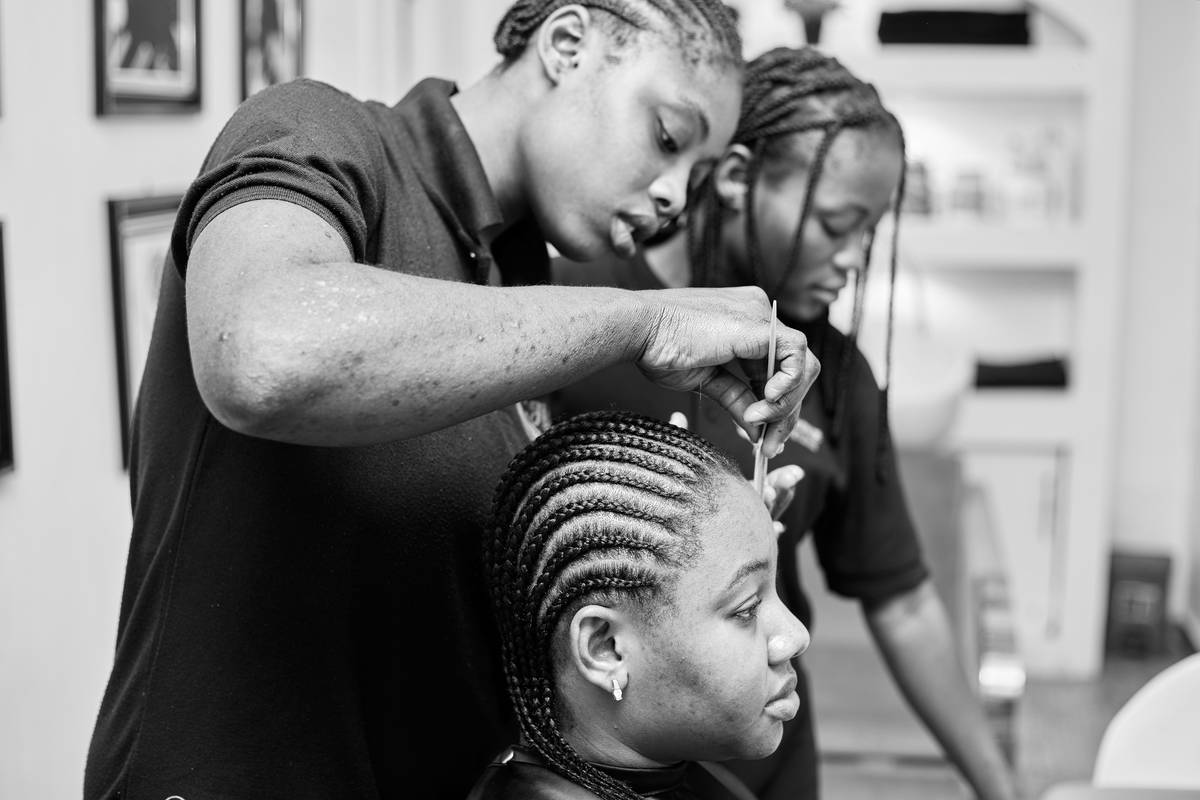
Too tight? Inflammation. Too loose? Frizz city. The rule: you should be able to slide a fingertip under the base without resistance. Anchor near the root—but never yank. Use a rattail comb *gently* for clean parts; never saw back and forth.
| Method | Tension Level | Longevity | Scalp Comfort |
|---|---|---|---|
| Traditional Box Braids (tight pull) | High | 2–3 weeks | Poor |
| Afro-Friendly Feed-In Braids | Low-Moderate | 5–7 weeks | Excellent |
| Two-Strand Twists (synthetic) | Minimal | 3–4 weeks | Very Good |
Seal & Protect Overnight
After braiding, mist with a light leave-in + water mix. Then seal with jojoba oil—never heavy butters that trap sweat. Sleep on satin. Always.
The Industry Secret Stylists Won’t Tell You
Here’s the reality: most salons push quick installs for profit—not longevity. But the real pro move? Braid in sections based on scalp zones. The crown has thinner skin—go looser. The nape? Denser follicles, slightly more tension tolerated. Customize per quadrant. And never braid past 8 hours. Fatigue leads to sloppy technique. Period. Your hair deserves precision, not speed.
FAQ
How often should I wash braids using Afro-Friendly Techniques?
Every 10–14 days with diluted shampoo. Focus on the scalp, not the length. Pat dry—never rub.
Can I swim with these braids?
Yes—but rinse immediately after. Chlorine dries out both your hair and extensions. Wear a swim cap for extra protection.
Do Afro-Friendly Techniques work on short natural hair?
Absolutely. Use micro feed-ins or stitch braids. Minimum length: 2 inches. Anything shorter? Opt for cornrows with protective ends.